Alright, let's talk about getting water out of the ground. If you're looking at a new well for your place around Rockford, you've probably heard a few terms thrown around. Two big ones are rotary drilling and percussion drilling. These are the main ways we get a hole in the ground deep enough to hit that sweet, sweet aquifer. But which one's right for you? It's not a one-size-fits-all answer, so let's dig into it.
Rotary Drilling: Fast and Flexible
Rotary drilling is probably what most folks picture when they think about a modern well rig. It uses a spinning drill bit that grinds through the earth, kind of like a giant drill press. We push drilling fluid — often called 'mud' — down the drill pipe and then it comes back up the annulus (that's the space between the drill pipe and the borehole wall). This fluid does a few things: it cools the bit, carries rock cuttings to the surface, and keeps the borehole walls stable so they don't collapse.
Here's what I've seen with rotary:
- Speed: It's generally much faster than percussion drilling, especially in softer ground like sand, clay, and gravel. We can often get a well drilled in a day or two, depending on how deep it needs to be and what the ground's like.
- Cost: Because it's quicker, the initial drilling cost can sometimes be lower than percussion, especially for shallower wells or in easy-to-drill geology. But, the equipment is more complex, and those drilling fluids do add to the expense.
- Durability: A well drilled with rotary methods can be very durable. We usually put the casing in as we drill or right after, and the borehole typically ends up very straight and true.
- Maintenance: Pretty standard stuff. Like any well, you'll need regular pump checks and water quality testing. The borehole itself is usually stable, which is nice.
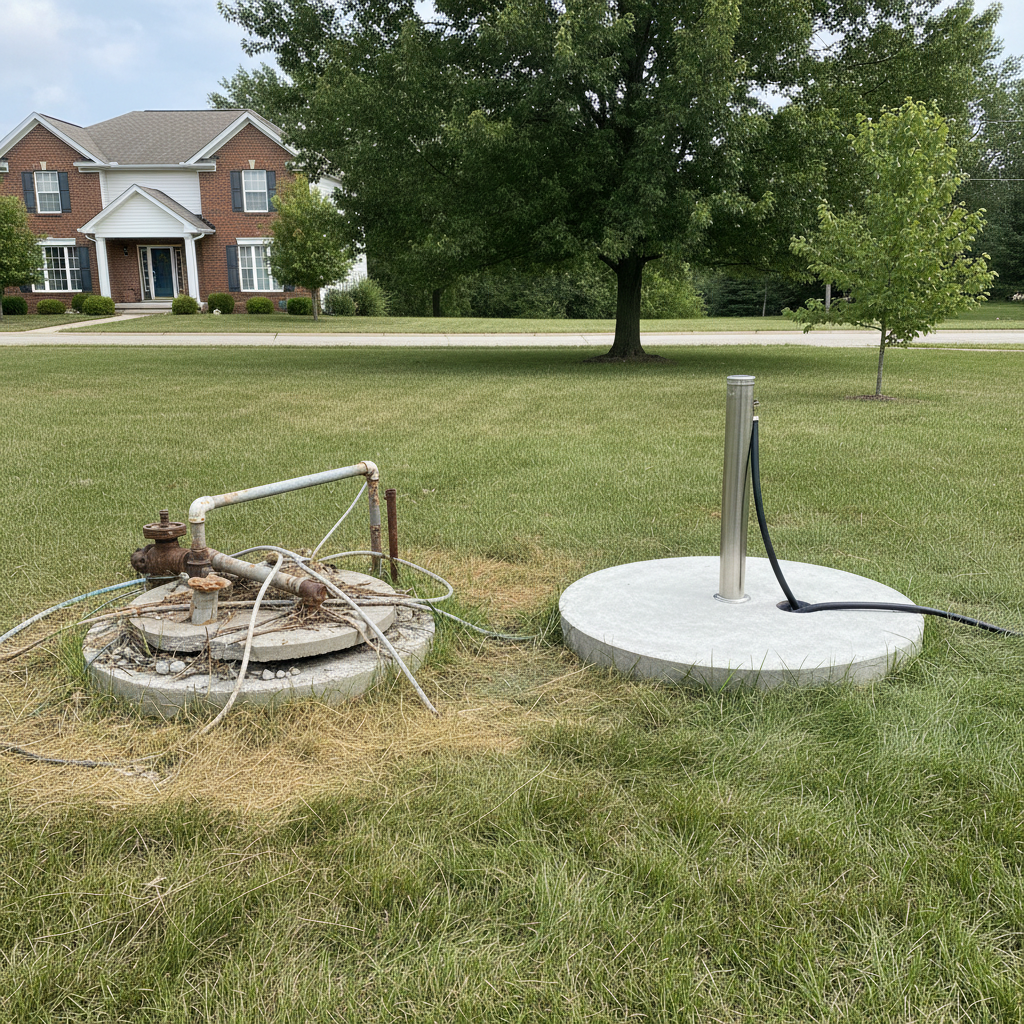
- Appearance: The finished wellhead looks like any other modern well, neat and compact. The drilling process itself can be a bit messier on site because of the drilling fluid, but we always clean it up.
Percussion Drilling (Cable Tool): The Old Reliable
Now, percussion drilling, or cable tool drilling, is a different beast entirely. This is an older, more traditional method, but don't let 'older' fool you into thinking it's not effective. It works by repeatedly lifting and dropping a heavy string of tools (a drill bit, drill stem, and jars) into the borehole. It's basically pounding its way through the earth. The cuttings get mixed with water and then we bail them out of the hole periodically.
Here's the lowdown on percussion:
- Speed: It's slower, no two ways about it. It's a methodical, pound-by-pound process. A well that takes a day with rotary might take several days or even a week with percussion.
- Cost: That slower speed often means higher labor costs, which can make the overall drilling cost higher than rotary, especially for deeper wells. However, the equipment is simpler, and there are no drilling fluid costs to worry about.
- Durability: This is where percussion really shines, especially in certain conditions. Because it pounds its way through, it's incredibly good at getting through hard rock formations. The casing gets driven down as the hole advances, providing excellent stability and sealing off different water zones. This can lead to a very robust, long-lasting well, believe me.
- Maintenance: Again, standard well maintenance. The well itself is often considered very resilient because of how it's built.
- Appearance: Similar to rotary, the finished wellhead is neat. The drilling process is typically cleaner on site since there's no drilling mud involved, just rock cuttings and water.
Which One Should You Choose for Your Rockford Home?
Okay, so you've got the basics. Now, for the real talk. For most homeowners in the Rockford area, especially if you're in a newer development or an area with more consistent soil and gravel, rotary drilling is often the go-to choice. It's efficient, cost-effective for many situations, and gets the job done quickly.
However, there's a big 'but.' If you're out in some of the older parts of Winnebago County, or if we hit really tough, consolidated rock formations, or if you're in an area where we know there are specific geological challenges – like the kind of fractured limestone we sometimes see around the Rock River floodplain – percussion drilling can be the superior option.
Why? Because percussion drilling is incredibly good at getting through hard rock and driving casing through difficult, unstable ground. It creates a very robust well that's less likely to have issues like borehole collapse in challenging geology. It's a slower, more deliberate process, but sometimes, that's exactly what you need for a well that's going to last for generations.
At Valley Well Drilling, we've got the equipment and the know-how for both methods. When you call us out for a site assessment, we're not just guessing. We look at geological maps, talk about your specific property, and consider the local conditions. We've drilled enough wells around here to know what works best for different situations, whether you're out near New Milford or closer to the city limits where the ground might be a bit more predictable.
My recommendation will always be based on what's going to give you the most reliable, long-lasting water supply for your specific property, not just what's fastest or cheapest on paper. Sometimes, paying a little more upfront for a percussion well means you'll have fewer headaches down the road. Other times, a rotary well is perfectly suited and saves you money. It all depends on what's under your feet.